
A prenatal skin atlas reveals immune regulation of human skin morphogenesis
1/26/20261 min read
Introduction
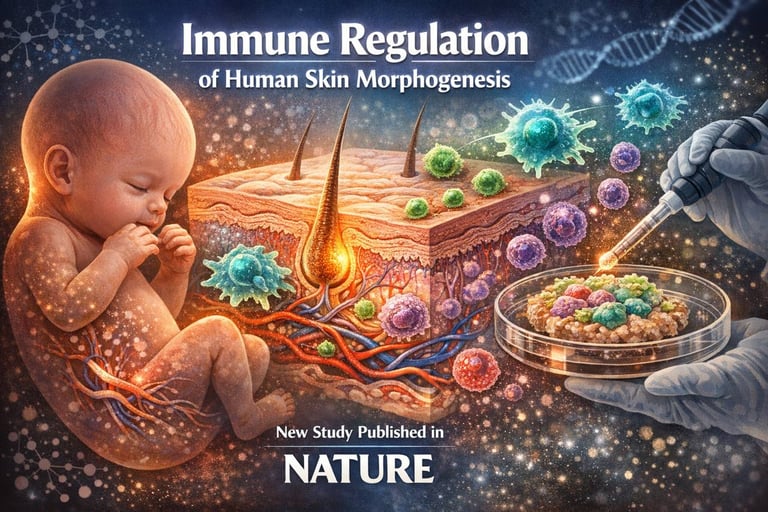
Skin development in human embryos is far more complex than previously believed. While traditionally immune cells like macrophages are studied for defense roles, new research shows that they also actively shape how skin forms before birth.
Key Findings
1. Immune Cells Do More Than Defense
• The study built a comprehensive single-cell and spatial transcriptomics atlas of human prenatal skin from 7 to 17 weeks of gestation.
• Surprisingly, macrophages (a type of innate immune cell) are found in prenatal skin very early and play active roles in tissue development — not just immune defense.
2. Crosstalk Between Cell Types Drives Development
• The research showed significant communication between immune and non-immune cells in areas where structures like hair follicles form.
• These interactions are crucial for angiogenesis (formation of blood vessels) and proper skin morphogenesis.
3. Organoid Models Reveal Functional Roles
• Scientists compared natural prenatal skin with hair-bearing skin organoids made from stem cells.
• Organoids worked well for many cell types but lacked immune cells. When researchers added macrophages back into organoid cultures, blood vessel formation improved, highlighting how immune cells help structure tissues beyond defense.
Why It Matters
This study challenges the old idea that immune cells simply protect tissues. Instead, it reveals that immune cells act as architects during development, guiding how organs form long before birth.
Understanding these processes:
• Deepens our knowledge of embryonic morphogenesis
• Can improve organoid models used in research and drug testing
• Offers clues to scarless wound healing and regenerative medicine
Conclusion
This exciting research highlights the multi-functional roles of immune cells in prenatal development — especially in human skin formation. It exemplifies how cutting-edge techniques like single-cell sequencing and organoid modeling are reshaping our understanding of embryology and tissue biology.e...

Follow
Contact
info@microlab.ink
© Microlab-copyright 2026
