

Identifying Connective Tissue Types Under H&E
As a first-year medical student, mastering histology is crucial not just for passing exams but also for understanding the fundamental architecture of the body. One key skill is learning how to identify various types of connective tissues using H&E (Hematoxylin and Eosin) staining. This knowledge will not only help you in histology practicals but also in understanding pathology later in your studies.
Why it matters in exams
Connective tissues are ubiquitous in the human body and play essential roles, from providing structural support to facilitating the healing process. Many exam questions focus on histological identification, so being able to accurately distinguish between types of connective tissue is vital. Knowing the features of loose connective tissue, dense connective tissue, and specialised types like adipose or cartilage can help you ace both practical exams and written assessments. If you can recognise the distinct characteristics of these tissues, you’ll be one step closer to mastering histology.
Key Features of Connective Tissue Types
- Loose Connective Tissue: Characterised by a loose arrangement of collagen and elastin fibres, this tissue is often found beneath epithelial layers. Look for a gel-like matrix with numerous cells, including fibroblasts and macrophages.
- Dense Connective Tissue: This tissue has tightly packed collagen fibres, making it strong and resilient. You’ll find it in tendons and ligaments. Under the microscope, it appears more organised than loose connective tissue and may have fewer cells.
- Adipose Tissue: Often called fat tissue, it can be recognised by the presence of large adipocytes that store fat. The cells appear as large empty spaces in H&E stains due to the lipid content being dissolved.
- Cartilage: Look for chondrocytes within lacunae and a matrix that can be either hyaline, elastic, or fibrocartilage based on its fibre content. Hyaline cartilage is smooth and glassy, while elastic cartilage has more elastin making it flexible.
- Bone: In bone tissue, you will see a hard matrix with osteocytes trapped in lacunae. The H&E stain highlights the dense arrangement of collagen fibres and mineral deposits.
How to remember it
To help you recall the characteristics of connective tissues, try using the mnemonic “Loud Dogs Always Bark,” where:
- L = Loose Connective Tissue
- D = Dense Connective Tissue
- A = Adipose Tissue
- B = Bone
- C = Cartilage
This mnemonic not only helps you remember the types but also the order of their recognition in slides.
Practice Makes Perfect
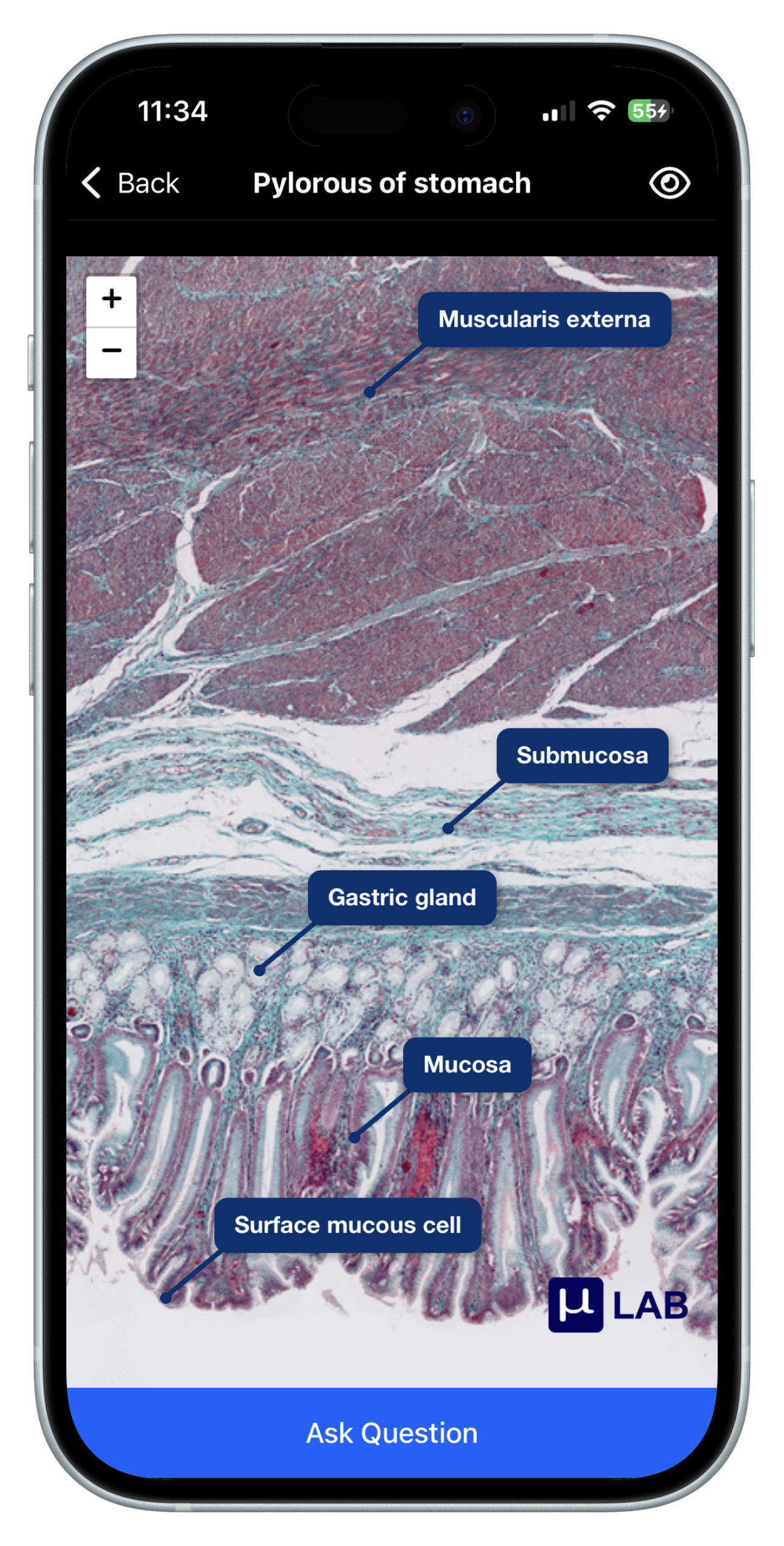
As you prepare for your histology exams, spend time looking at different connective tissues under the microscope. Practising with images, slides, or virtual microscopy can significantly enhance your ability to identify these tissues accurately. Remember, histology is a visual science, and the more you practice, the better you will become.
For more resources to aid your study, practice with interactive flashcards and quizzes on Microlab.
Leave a Reply