

Quick Tips for Identifying Histology Slides Under Time Pressure
Histology exams can often feel like a race against the clock, especially when you have to identify slides rapidly. Knowing your tissues is crucial, not just for passing the exam but for your future medical practice. In this post, we’ll explore effective strategies that medical students can employ to enhance slide identification skills, even when the pressure is on.
Why It Matters in Exams
When it comes to histology exams, the ability to quickly and accurately identify tissue types can make or break your score. Many assessments include slide identification as a significant component, testing not just your knowledge but also your speed and efficiency under exam conditions. Mastering slide identification helps solidify your understanding of tissue structure and function, which is essential for both your exams and clinical practice.
Strategies for Success
Here are some practical strategies to help you improve your slide identification skills:
- Familiarise Yourself with Common Tissues: Start by learning the basic histological features of common tissues such as epithelium, connective tissue, muscle, and nervous tissue. Understanding their characteristics will provide a foundation for quicker identification.
- Use a Systematic Approach: Develop a consistent method for examining slides. Begin with the context (what type of organ or system), then move on to the structure (what tissues are present), and finally focus on the details (unique features that distinguish one tissue from another).
- Practice with Timed Quizzes: Use flashcards or apps that allow you to practice slide identification under timed conditions. This will simulate exam pressure and help you get comfortable with the time constraints.
- Group Study Sessions: Organise group study sessions with peers. Quizzing each other on slide identifications can enhance your learning experience and provide different perspectives on identifying tissues.
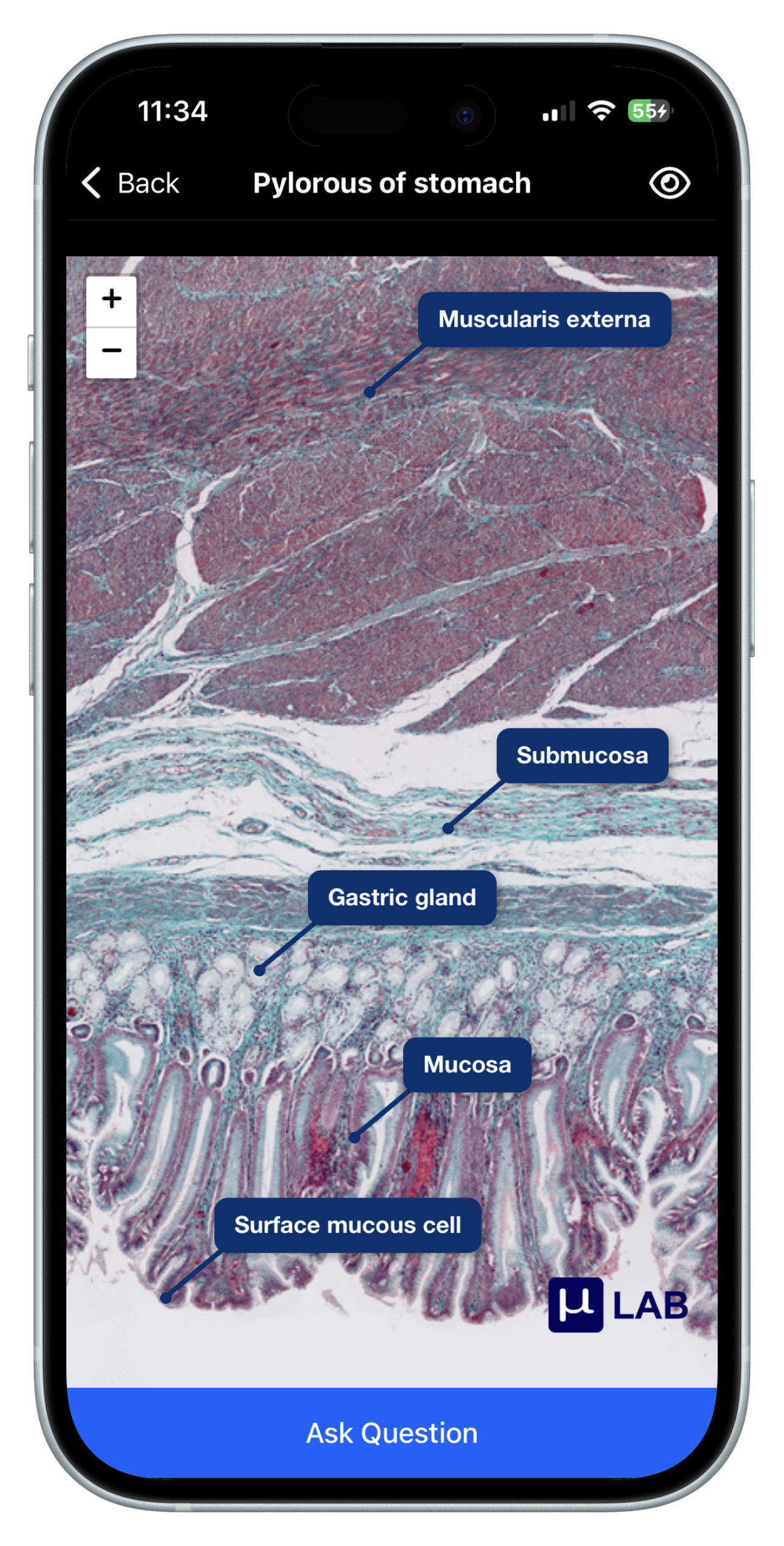
- Utilise Online Resources: There are many online resources and databases available that provide histology slide images. Frequent exposure to these images will improve your recognition skills.
How to Remember It
To aid in memorisation, consider using mnemonics or patterns that help you recall tissue types quickly. For example:
- “E-C-M-N” for Epithelium, Connective, Muscle, and Nervous. Think of these as the four pillars of histology.
- Visual Patterns: Notice that epithelial tissues often have specific shapes (cuboidal, columnar, squamous). Associate these shapes with their functions or locations in the body to create a mental map.
By employing these strategies, you will not only improve your slide identification skills but also gain confidence in your histology knowledge.
Remember, practice makes perfect. The more time you spend familiarising yourself with histology slides, the more intuitive it will become. So, don’t shy away from spending those extra hours reviewing slides and quizzing yourself!
For more practice, visit Microlab for interactive flashcards and quizzes designed to help you ace your histology exams.
Leave a Reply