

Understanding the Layers of the GI Tract
The gastrointestinal (GI) tract is a complex organ system that plays a vital role in digestion and nutrient absorption. For medical students, knowing the histological makeup of the GI tract is crucial, not just for exams, but also for understanding its functions and potential pathologies. Each section of the GI tract, from the oesophagus to the rectum, has a distinct histological structure that reflects its unique role in digestion.
Why It Matters in Exams
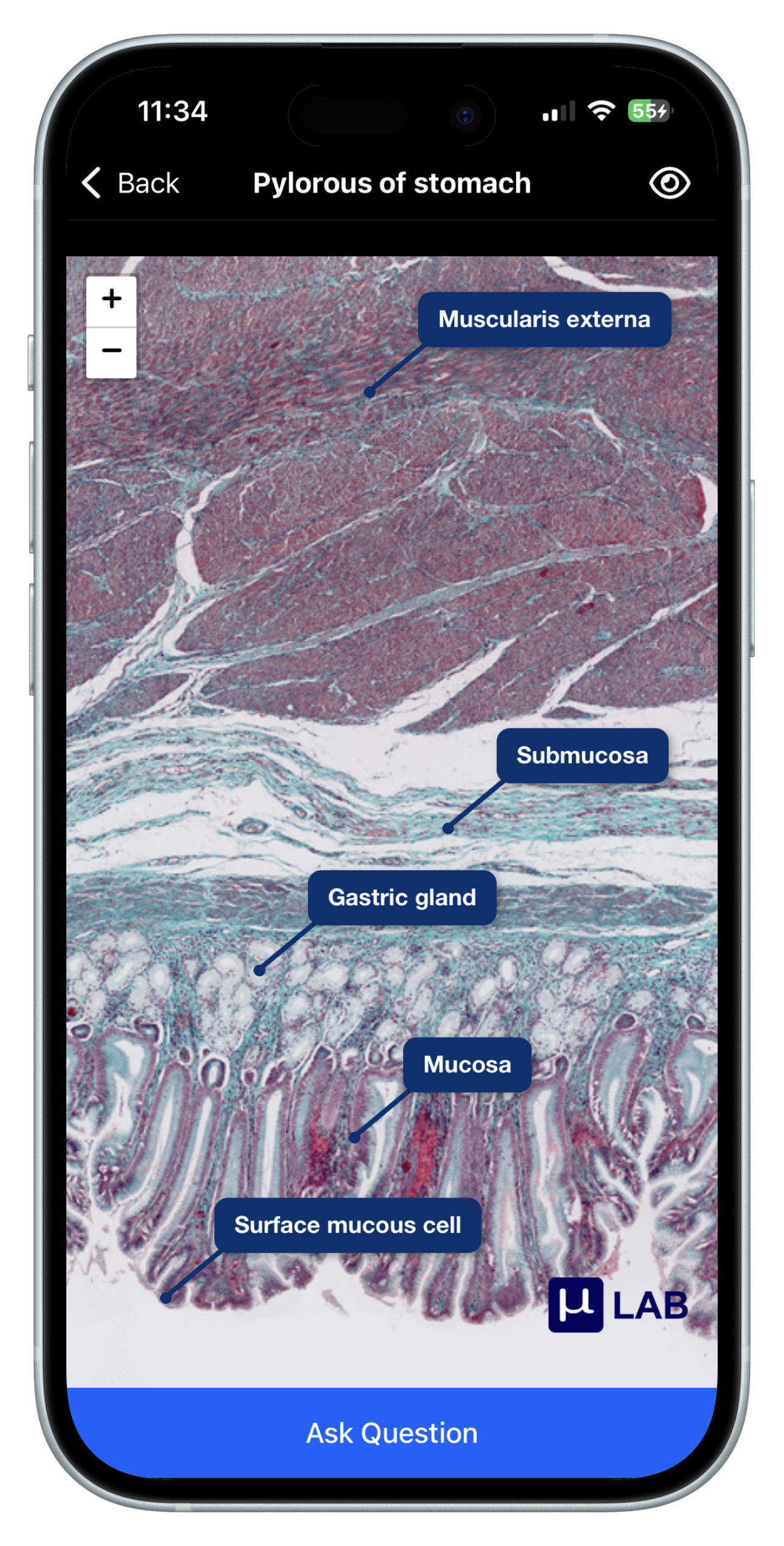
When studying for histology exams, you’ll often encounter questions about the layers of the GI tract. Each layer—mucosa, submucosa, muscularis externa, and adventitia—has specific characteristics and functions. Understanding these layers is essential for identifying diseases such as inflammatory bowel disease, cancers, and other GI disorders.
The Four Key Layers
- Mucosa: The innermost layer consisting of epithelial cells, lamina propria, and muscularis mucosae. This layer is responsible for secretion and absorption.
- Submucosa: A connective tissue layer that contains blood vessels, nerves, and glands. It provides support and elasticity.
- Muscularis Externa: Made up of two layers of smooth muscle: an inner circular layer and an outer longitudinal layer. This layer is essential for peristalsis and segmentation.
- Adventitia: The outer layer, which consists of connective tissue that anchors the GI tract to surrounding structures.
How to Remember It
To help you memorise the layers of the GI tract, try using the mnemonic: “My Silly Muscles Are Amazing”. Each word corresponds to a layer:
- My – Mucosa
- Silly – Submucosa
- Muscles – Muscularis Externa
- Are – Adventitia
- Amazing – Remember to appreciate their functions!
Additionally, consider sketching out the layers while labelling each part. Visual aids can significantly enhance your retention of complex information.
Conclusion
Understanding the histological layers of the GI tract is not only vital for your exams but also for your future practice as a healthcare professional. By mastering these details, you’ll be better equipped to diagnose and understand various GI disorders. For more interactive study tools, practice with interactive flashcards and quizzes on Microlab.
Leave a Reply